FAIR USE NOTICE

FAIR USE NOTICE

A BEAR MARKET ECONOMICS BLOG


This site may contain copyrighted material the use of which has not always been specifically authorized by the copyright owner. We are making such material available in an effort to advance understanding of environmental, political, human rights, economic, democracy, scientific, and social justice issues, etc. we believe this constitutes a ‘fair use’ of any such copyrighted material as provided for in section 107 of the US Copyright Law.

In accordance with Title 17 U.S.C. Section 107, the material on this site is distributed without profit to those who have expressed a prior interest in receiving the included information for research and educational purposes. For more information go to: http://www.law.cornell.edu/uscode/17/107.shtml

If you wish to use copyrighted material from this site for purposes of your own that go beyond ‘fair use’, you must obtain permission from the copyright owner.

FAIR USE NOTICE FAIR USE NOTICE: This page may contain copyrighted material the use of which has not been specifically authorized by the copyright owner. This website distributes this material without profit to those who have expressed a prior interest in receiving the included information for scientific, research and educational purposes. We believe this constitutes a fair use of any such copyrighted material as provided for in 17 U.S.C § 107.

Read more at: http://www.etupdates.com/fair-use-notice/#.UpzWQRL3l5M | ET. Updates

All Blogs licensed under Creative Commons Attribution 3.0

Creative Commons License
This work is licensed under a Creative Commons Attribution 3.0 Unported License.

Tuesday, May 13, 2014

Google’s Snoops: Mining Our Data for Profit and Pleasure


Google’s Snoops: Mining Our Data for Profit and Pleasure


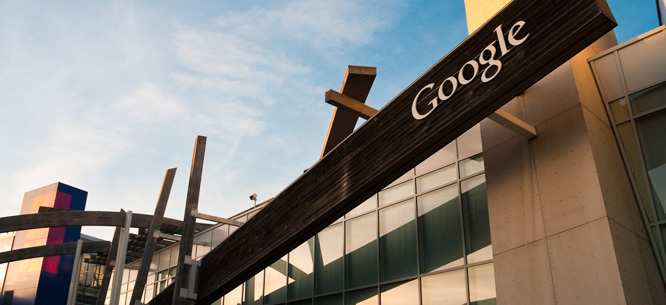
At the Google headquarters in Mountain View, CA (Denis Capellin/Flickr)
There was a running gag among fellow workers where we would walk by each other and whisper “Don’t be evil, pft!” and roll our eyes.
–Former Google employee
Google’s publicists have been working extra hard this year. Edward Snowden’s revelations have made the company look like a pawn of the NSA; Google Glass has been drawing the ire of privacy advocates around the world; and in two separate lawsuits, both of which are now moving forward over Google’s strong objections, the company has been accused of wiretapping. The first suit is testing the legality of the company’s practice (now supposedly discontinued) of collecting information from private Wi-Fi networks using its Street View vehicles, and the second is challenging its ongoing practice of analyzing the contents of all emails sent and received by Gmail users. The company defends its practice of scanning emails as a means of gathering information it uses to send people targeted ads.
Although wide-ranging, the revelations and lawsuits are overlooking an important aspect of Google’s activities that is especially worrisome—the human element. It’s not just Google’s computers that have access to those emails; employees do too, and that introduces troubling possibilities that go far beyond the mundane world of targeted advertising. Edward Snowden and Bradley Manning were just low-level workers when they got ideas. What kinds of crazy notions might be popping into the heads of the 30,000 prodigies at Google, Inc.?
I am singling out Google here, as opposed to other high-tech giants like Facebook, or, for that matter, the NSA itself, because Google has a unique business model that gives it unfettered access to and control over immensely rich individual “profiles” of information on a scale that is unprecedented. The model is exquisitely simple and sublimely deceptive: We give you free services that you are likely to use dozens of times a day while we invisibly track and record everything you do. Based on what we have learned about you, we then charge advertisers premium fees to reach exactly the right buyers for their products and services.
“Google’s dance,” as I have called it in previous writings, lies in masking the company’s business model behind the endless array of free services. On the surface, Google appears primarily to be an information provider, but it is actually a glorified advertising firm, with 97 percent of its revenues coming from advertisers. Users see only the surface, which they love, but would they be so enamored if they were more aware of what the surface was for?
Twenty-four hours a day, across more than sixty free product “platforms” such as Gmail, the Google search engine, YouTube, Google Plus, Google Maps, Street View, and Google Wallet, the company is storing, indexing, and cross-referencing information about the beliefs, tastes, and activities of a billion people—including you—and not just when you are online. If you have the Android system on your mobile device, Google can track you even if you are innocently reading your ePub version of The Motorcycle Diaries. If you use Google Voice, your calls are transcribed, analyzed, indexed, and added to your profile, just as if they were Gmails. And if, in the near future, you find yourself within spitting distance of someone wearing Google Glass, beware: what you do and say can be recorded. Think J. Edgar Hoover multiplied by, well, a google (that’s a 1 with 100 zeros after it). No other company aggregates so much individual data so aggressively, competently, and invisibly.
Just how much data does Google actually have about you? If you are active in the digital world, it probably has the equivalent of filing cabinets full—but what, exactly, is in those drawers? Google won’t say. The content is private, and Google’s privacy, unlike yours, is sacrosanct.
Google appears primarily to be an information provider, but it is actually a glorified advertising firm, with 97 percent of its revenues coming from advertisers.
Once you unknowingly give them information about yourself—even search terms you never typed fully, or draft emails you never actually sent—it is their property, which, according to their Terms of Service Agreement (to which you automatically assent when you use any Google product, even if you don’t know you’re using a Google product), they can share that information, at their discretion, with “those we work with”—or just about any agency or individual if the company has a “good faith” belief that doing so is required by law or will “protect . . . the rights, property or safety of Google.”
But not with you. Unless regulation requires it—and so far, none does—the company will never share information about you with you. Needless to say, you also have no way to spot or remove incorrect information that may have found its way into your file drawers. Many Google employees, on the other hand—especially the whiz kids on the data mining teams—can look at your personal detritus all they want.
What could possibly go wrong?
Let’s think about this in general terms, or at least in psychological terms (that’s my field). How would people behave who had easy access to the private emails of hundreds of millions of people, including those written by their ex-spouses, childhood crushes, favorite celebrities, and least favorite politicians? Would they peek now and then? And if they found some juicy tidbits, would they sometimes joke about them with office mates? If they found some serious dirt on the jerk who bullied them in high school or the blowhard right-wing congressman who is ruining America, would they be tempted to leak some info to the Guardian or the FBI?
And what if they could also view, in real time, which search terms people were using and which websites people were visiting, along with a record of all the search terms people had ever used and all the websites people had ever visited?
What if, with a few keystrokes, they could alter the contents of a dossier to make a competitor look like a pedophile or push their friends’ websites onto the treasured first page of search rankings—maybe even influence the outcome of a close election by making search rankings favor one candidate?
What if you were sitting at that desk and controlling that keyboard? Would you occasionally peek, if only to take a break from the daily grind? Would you do harmless favors for friends and family members? Would you try now and then to help the world in some small way?
Of course you would.

Pertinent here is a little-known 2011 book that presents a fictionalized account of the lives of Google software engineers. Written by Shumeet Baluja, a senior staff research scientist at Google’s headquarters in Mountain View, California, The Silicon Jungle tells an unsettling story about Stephen Thorpe, an over-the-hill programmer who competes with thousands of college-age geniuses to land one of those coveted summer internships at. . . well, Google, really, even though Baluja pretends it’s not. I’ll call it “eGoogle,” for “ersatz Google.”
Unlike Dave Egger’s recent Google-bashing novel, The Circle, Jungle is by a knowledgeable insider. Baluja has a Ph.D. in computer science from Carnegie Mellon and used to be chief scientist at Lycos. He has also worked for Google for more than ten years, and, he tells me, has been prohibited by the company from talking about his book publicly—which is probably why you’ve never heard of it.
Here are a few important features of the culture at eGoogle, some almost dizzying in their implications:
Interns on the data mining teams necessarily have access to all eGoogle data, as do many other eGoogle employees. They need this access because their job is to find hundreds of thousands of new customers for high-rolling eGoogle customers who sell everything from ulcer medications to umbrellas. To guarantee the sale of just about anything, the interns write programs that scan the emails, search histories, and purchase histories of a billion people.
In other words, they are really mining for gold, although Baluja emphasizes that they see the challenges they are given as academic exercises; they are completely oblivious to the millions of dollars eGoogle rakes in with every new program they write. eGoogle is careful, Baluja says, to house the programmers and the accountants in separate buildings and to make sure they never meet.
What if you could view, in real time, which search terms people were using and which websites people were visiting, along with a record of all the search terms people had ever used and all the websites people had ever visited?
When the programmers are not filling coffers, they are scanning eGoogle’s massive databases for racy emails and pining over the private emails of ex-girlfriends, especially the emails with nude photos attached. When an especially titillating pic turns up, they display it on massive overhead screens for coworkers to admire. At eGoogle, everything is spectacular, even the perversions.
When, one evening, an intern is monitoring his ex-girlfriend’s online chats, he learns of a steamy party not far from the eGoogle campus, and four of the most lecherous of the interns are off and running. (We later learn who got lucky.)
Back on “campus,” one intern is made a full-time employee on the spot when he develops an app that allows eGoogle employees to zoom in on neighborhoods using eGoogle’s version of Google Earth and view, house by house, what kinds of activities people are engaged in online. When people are emailing, the houses light up brown; when they’re viewing porn, the houses light up pink. The app is an instant sensation among eGoogle employees, who are eager to see, godlike, which of their neighbors are being naughty.
Stephen’s girlfriend, meanwhile, is trying to get her doctorate at Brown University by monitoring conversations of radical Islamists on a website she’s created, but she can’t get any traffic. After Stephen mentions her dilemma to a fellow intern—one on a search-engine team—her website suddenly jumps up a gazillion slots in eGoogle search rankings, and thousands of prospective suicide bombers sign on.
The plot thickens when Stephen starts mining data for an executive at a nonprofit organization. The executive asks him to search eGoogle’s data for innocent people who are likely to turn up mistakenly on government watch lists, claiming his organization is going to help them protect themselves from overzealous government bureaucrats. Using the same techniques he uses to find widget buyers, Stephen quickly generates a list of 5,000 ideal watch-list candidates, which the scheming executive promptly sells for a seven-figure sum to Arab terrorists.
When government spooks figure out what Stephen has been doing, they make him an offer he can’t refuse: a lifetime of indentured servitude at a secret government research facility where there is no free food, the computers are clunky, and the databases are pathetically small. It’s either that or prison. How, he muses at the end of the book, can the United States ever win the war on terror when the government’s data processing resources are so paltry?
That’s the only thing Baluja gets wrong. Snowden’s revelations about the NSA’s access to the databases of Google, Microsoft, and other companies were inconceivable when The Silicon Jungle was published. Baluja tells us about individual eGoogle employees who routinely feed data to the feds, but he insists that large-scale data sharing would never be allowed by eGoogle executives. Snowden’s disclosures, which apparently are still not complete, remind us that no digital data are ever really private—that data are always vulnerable to the wiles of determined individuals or organizations.
There is also one aspect of Baluja’s tale that is ludicrous on its face, and that is his disclaimer in the book’s introduction that eGoogle (which he actually calls “Ubatoo”) isn’t really Google. In both form and function, it certainly looks like Google, and Baluja also acknowledges that the “temptations, . . . ability, brains, and computational power” necessary to do the kinds of mischief he describes are real.   

Google’s privacy violations vary from the petty and mundane to the truly spectacular. On the mundane side, in July 2010, a careless twenty-seven-year-old software engineer named David Barksdale was fired by Google for spying on at least four underage teens through their various Google accounts. While still employed, according to a September 2010 report by Gawker.com, he showed a friend the power he had over private information by pulling up his friend’s “email account, contact list, chat transcripts, Google Voice call logs—even a list of other Gmail addresses that the friend had registered but didn’t think were linked to his main account—in seconds.”
Why isn’t your massive personal profile heavily encrypted so prying eyes can’t see it—or at least not “in seconds”? Public statements in recent years by senior Google employees explain why. According to Vint Cerf, Google’s Chief Internet Evangelist, “we couldn’t run our system if everything in it were encrypted because then we wouldn’t know which ads to show you.” In other words, their business model depends on lightning-quick connections between the insecure data in your digital filing cabinet and the ads supplied by their paying customers, which makes your data easy pickings for rutting David Barksdales.
In July 2010, a careless twenty-seven-year-old software engineer named David Barksdale was fired by Google for spying on at least four underage teens through their various Google accounts.
I have been a programmer most of my life and a research psychologist for more than thirty years. I can tell you with certainty that the kinds of questionable activities Baluja describes are not only plausible but inevitable in the hyper-casual high-tech environment Google maintains, no matter what internal rules may be in place. Google openly takes pride in hiring independent thinkers and letting them frolic; software engineers are officially allowed to play a whopping 20 percent of their work time. In that kind of world, anyone with sufficient password authority or technical expertise can do exactly the kinds of things Baluja depicts—and worse.
When it was revealed in 2010 that Google Street View vehicles had been secretly collecting personal information from personal Wi-Fi networks in more than thirty countries for several years, the company claimed that this was a pet project of a single software engineer—Marius Milner. Although outed in 2012, Milner, who identifies his profession as “hacker” on LinkedIn, is still employed by Google.
Its public denials notwithstanding, Google has, from the top down, consistently shown little respect for privacy. In 2009, Google’s CEO, Eric Schmidt, expressed the philosophy that drives the enterprise: “If you have something that you don’t want anyone to know, maybe you shouldn’t be doing it in the first place.” In other words, all information is fair game.
This helps explain projects like Buzz, a social network service that Google unveiled in 2010. Without anyone’s permission, the company instantly created an online community intended to overwhelm Facebook, just as its Gmail rollout had quickly overwhelmed Hotmail and Yahoo. The company created Facebook-like pages, already complete with friends, based on who its Gmail users—175 million of them at the time—emailed most frequently. People were so outraged by this blatant incursion into their personal lives that the platform was shut down after eighteen months.
Perhaps more outrageous, it was revealed in 2012 that Google engineers had for several years been hacking into Apple’s Safari browser, allowing them to surreptitiously monitor the search activities of millions of iPhone, iPad, and Mac users. For that little caper, Google was fined $22.5 million by the FTC—the largest fine in the agency’s history.
Comments like Schmidt’s and projects like Buzz are indicative of a kind of culture that both nurtures and encourages daring exploits like the ones in Baluja’s book, with each swashbuckling employee acting out mischievous impulses, large and small, every day. Google offers its employees an unconstrained world that is rich in resources in order to maximize creativity, and research on the creative process that I have been conducting since the 1980s shows that Google is doing things exactly right in this regard. But that kind of culture also magnifies just about every human tendency you can think of, including voyeurism, grandiosity, and greed.
How many David Barksdales and Marius Milners—individuals with the power to alter the course of a life or an industry in seconds—are, at this very moment, toying with Google’s massive, unregulated databases in ways we cannot even imagine? How many of them are getting ideas?
Computers are programmed and controlled by people, and nothing will ever change that simple fact. As soon as a Google computer “scans” an email—an obfuscating word for “reads”—any Google employee with sufficient password authority or technical savvy can too. When Google’s computers track and monitor people’s internet activities, so can its employees.
How much private information does Google have about you? They know, but they won’t say.
How is that information being used by the brash young techies the company takes such pride in hiring? Most likely, exactly as they please.
And how might their use of that information affect our lives in the future? No one knows—not even Google’s top executives—but Murphy’s law probably applies.

Robert Epstein is Senior Research Psychologist at the American Institute for Behavioral Research Technology in Vista, CA, and the former editor-in-chief of Psychology Today magazine. A Ph.D. of Harvard University, he has published fifteen books and more than 250 articles on artificial intelligence, creativity, and other topics.

Friday, May 2, 2014

Why Google Plus Will Not Die (But May Change)

Marketing Land


Last week’s announcement that Google+ founding father Vic Gundotra has left Google opened the door to a rash of speculation about the future of Google’s biggest venture into social media.
Google-plus-not-dead-yet
The idea that Google+ might be dying started with a TechCrunch post that included statements from a few anonymous sources declaring Google+ to be “walking dead” at Google:
We’ve heard [...] that Google+ is not “officially” dead, more like walking dead: “When you fire the top dog and take away all resources, it is what it is.”
In other words, supposedly Google had decided that Google+ was a failed experiment that needed to be put on “life support only/do not resuscitate” status. That post was cited by many others in the tech press as proof that Google+ is scheduled for a date with the Google morgue.
It is my opinion that such conclusions are not only premature and unwarranted, but actually make no sense. That is, they make no sense to anyone who really understands what Google+ is within the Googlesphere. However, that doesn’t mean that Google+ won’t be in for some serious changes in the coming months.
In this post, I will make four assertions about the future of Google+. I don’t mean any of these assertions to be absolutes, or even “predictions.” Like all of us on the outside of the few offices clustered around Larry Page’s in Mountain View, I see through a glass dimly. But I base these on my long experience of observing both Google and Google+.
Here’s what I will assert, followed by a more in-depth reason for each assertion:
  1. Google+ the social network and user data infrastructure of Google is not going away.
  2. However, Google+ the brand may change significantly (or even disappear).
  3. That change may be driven by the realization that the future for big online advertising companies like Facebook, Twitter, and Google is not so much in social engagement on one mega-network as it is in user data acquisition.
  4. The Google+ project has been an incredible success (even if the social network never achieved the success of Facebook) because it drove the unification of Google products, the creation of a unified user privacy policy and sign in, and supercharged the data acquisition needs of Google.

Assertion 1: Google+ Is Not Going Away

If I would hang my hat and put down money on anything in this post, it’s that Google has no intentions whatsoever of killing Google+. For one thing, we have strong statements from Google+ Chief Architect Yonatan Zunger that the TechCrunch article alleging the coming death of G+ was “utter bollocks” and that the supposed reassignment of G+ staff to other projects was nothing more than a logistical moving of staff to a larger building for space reasons.
In his own statement about Gundotra’s departure, Google CEO Larry Page concluded that the company would “continue working hard to build great new experiences for the ever increasing number of Google+ fans.” Other Google employees chimed in on Google+ threads to add their affirmations that Google+ wasn’t going anywhere.
It’s nice to have those statements from top people at Google, but (understandably) you might be hesitant to take their word for it. I don’t think you have to. There are more fundamental reasons why I think Google is far from done with Google+.
Google plus being turned off by Google?It just doesn’t make sense that Google would now dismantle Google+. Google+ isn’t an added-on product with an off switch you can flip in a moment. It is now truly baked in to the very infrastructure of almost all of Google’s online products and services.
Some have noted that Google has in the past killed products without sentimentality. That is true, but turning off something like Google Reader was like removing a sock. Dismantling Google+ would be more like ripping out a person’s central nervous system.
Furthermore, because of that intensive integration into nearly all of Google, Google+ performs a number of valuable functions for Google, even apart from the social network that is its most visible component. (Much more about that in my third assertion.)
So, I don’t think Google+ is going anywhere, But….

Assertion 2: The Google+ Name May Be Deemphasized

Google-questionI do think it quite plausible that we will, in the not-distant future, see a growing de-emphasis of the Google+ brand. Indeed, a possible hint of that came out just this week when The Verge noticed that Google is testing a version of their Sign In button for websites that says just “Sign in with Google” instead of “Sign in with Google+.”
Whether by bad luck or mishandling, or some combination of the two, the Google+ brand has never gained positive traction in public perception. Almost three years in, those of us who are advocates of the platform find ourselves still almost daily having to defend it from ridicule. That’s not a good position for any brand name.
However unfairly, the Google+ name has become almost indelibly linked by non-users with “fail,” “ghost town” and something that Google pushes unwanted on users of its other products. After three years, it may be time to admit that the opportunity to overcome that perception has been missed.
It may be that the social network continues to be known as Google+, but we stop hearing “Google+ is Google” type statements from Google. Perhaps, as Danny Sullivan speculated, user accounts may return to being just Google accounts. We might see the cessation of Google nagging (or in some cases, forcing) everyone to “sign up for Google+” in order to use other Google products.
The fact remains though, that Google could do all of that without killing the Google+ social network, and certainly without killing the other functions Google+ performs, which would be foolish.
So, conclusion to Assertion 2: Google+ is not going away, but the Google+ brand and how it is used by Google may change significantly.

Assertion 3: The Future Is NOT In Mega Social Network Platforms

Much of what I’m going to say here is building on an article by Mike Elgan titled “Why the Social Networks Are Falling Apart,” which you should read if you want to understand where all this is going now.
Mike’s article is quite cleverly titled. By “falling apart” he doesn’t at all mean that the major social networks are dying. Rather he’s commenting on their increasing move toward spinning off into developed or acquired apps that allow users to engage with one popular aspect of a network without having to get into all the other baggage that comes with the network as a whole.
An example of this would be the acquisitions of Instagram by Facebook and Vine by Twitter. Many pundits have been surprised that these apps haven’t yet been absorbed into their owner’s social networks.
But Elgan isn’t surprised at all. He says keeping these apps independent is a recognition by the Big Guys in social networking that an increasing number of users are shifting in two directions that actually complement each other: mobile and hyper-specific. (Note foursquare’s announcement yesterday that it’s splitting its functionality into two apps — including the newly-developed Swarm.)
Facebook was first to see this. Over the past two years, their users have shifted overwhelmingly to mobile. That created a real crisis for Facebook. Facebook has been entirely revenue-dependent on advertising inside their own platform, and mobile is notoriously advertising-averse.
At the same time, Facebook’s revenue model is perhaps even more threatened by another trend: the increasing move of users toward smaller, hyper-niche networks. Many users, and especially the younger set who are the future, seem to be increasingly wary of the “wide open” nature of big social networks. They just want to chat with their close friends, but the big networks tend to make conversations too open, pulling in all sorts of people they don’t necessarily want to interact with.
Which Google+ Circle do I put you in?The first response of these networks was to offer audience segmentation options, such as Circles in Google+ or Friends Lists on Facebook.
The problem with such segmentation options, though, is that very few users ever use them. It’s just too much work to create all those circles or lists.
Furthermore, doing that doesn’t actually match up with the way we engage with people in the real world. Joe may be a co-worker, but he also may be a close friend. However, he may not be someone I want to talk politics with. In the terms of Facebook relationships statuses, “it’s complicated.”
So users are turning to micro-network apps such as Instagram, SnapChat, and WhatsApp for two reasons: they are entirely mobile, which is where more and more users spend most of their online time; and, they can easily be set up to engage one tight circle of friends.
Just this week at the F8 event, Facebook made several announcements moving in the many-apps and hyper-niche direction.
But how does acquiring or building these micro-network apps help the bottom lines of the mega social networks?
Elgan gives the answer in his article. It’s a realization that the real value of social networks to big companies like Facebook or Google isn’t in user engagement (not discounting that that is valuable), but in data acquisition.
To put it bluntly, those micro-networks become rich sources of user data acquisition that can be used to better target advertising in places other than the social network itself.
(In keeping with that, at the F8 event, Facebook also announced FAN, a mobile ad network that extends outside the Facebook platform.)
That leads me to my fourth and final assertion.

Assertion 4: Even If Google+ The Brand Has Failed, Google+ The Platform Has Been An Amazing Success

I don’t doubt that Google really wanted Google+ to succeed as a true social network. I certainly think that was Vic Gundotra’s dream. As much as some like to say, “Don’t look at G+ as a Facebook killer,” do we really doubt for a moment that Google wouldn’t have loved if it were?
Look at the first year ad campaigns for Google+ (see an example below). They basically came across as, “Hey, look, you can do everything on G+ that you do on Facebook, but with better privacy (Circles)!” Obviously, that wasn’t a big enough disruption for most people to make the shift.
Even if they believed that Google+ was better designed and really did make privacy more up front than Facebook, the Facebook momentum was too much to overcome. Many of us G+ evangelists made fun of the “but my friends aren’t on G+” mentality, but it honestly carried tremendous weight.
So why am I asserting that Google+ the project has been a resounding success? Because even if it never becomes a household-word social network, Google+ instigated a radical restructuring of Google that makes Google much better positioned for the future, in light of what we discussed above.

One Google To Rule Them All

Whenever I discuss the importance of Google+ to Google, I always come back to January 2012. That was when Google used Google+ as the “excuse” to unify its privacy policy. Until then, there was a separate privacy policy for each different Google product. Users wanting to use those products while logged in agreed to terms specific to that product only.
But in January 2012, Google made all users “re up” their privacy agreements. Now, users would agree to one overarching agreement, based on their Google+ profile, that would cover and unify all Google services.
For the user, that provided increased convenience. She could now sign in to Google once and then seamlessly use all Google services. Not only did she not have to log in and out again, but also her profile carried over into all services, making them more useful.
From Google’s side, the advantages were enormous. Within Google itself, users were incentivized to remain logged in, thus allowing Google to better collect and collate user data and behavior between services.
But that’s not all. The convenience of using Google logged in, combined with increasing opportunities to use websites and apps through a Google login, meant that more and more people were on the web logged in to Google all the time. And that made it much easier for Google to collect even more user data.
The unified privacy agreement also paved the way for “Search Plus Your World” personalized search. With more user data, and more people staying signed in to Google all day long, search could become much more personalized. In theory, this leads to better search results for the individual. That means a happier user who will use Google more, and thus be more exposed to Google ads.
But what else does Google do with all that data? The primary revenue-centered use is for targeting advertising. The more Google knows about your personal information, your preferences, your online behaviors, your location, etc., the more accurately they can serve up ads targeted to you, specifically.
And that’s where Google has a distinct advantage over Facebook and Twitter: the Google Ad Network. Not only can Google show hyper-targeted ads in Google properties like Search and YouTube, but Google also owns and runs the largest online advertising network in the world, with millions of sites displaying Google AdSense ads. As noted above, Facebook is beginning to build its own ad network, but it is starting from way behind.
So, Google+ became the catalyst not only to finally unify Google, but also to get a much larger amount of user accounts, while incentivizing users to log in to those accounts, thus providing user data that generates more ad revenue for Google.

From Social Network To User Data Service

For the past week, I’ve been face palming over my lack of foresight to understand a major clue about the future I’m proposing here — a clue that was staring me in the face for at least the past six months.
Here it is. Up until some time last year, when you would hear an official Google+ spokesperson speaking at a conference, he or she would speak about the advantages of Google+ the social platform for brands. You’d hear about how well you can engage your audience, and the glories of Hangouts for brand building and customer retention, etc. That all changed about six months ago.
More recently, all Google+ spokespeople seem to speak off the same talking points sheet, and it’s all about Google+ Sign In for webmasters and developers.
At the time, I railed about that. I thought “once again, Google marketing missing the point.” I was frustrated that they were failing to teach businesses what I had been teaching for two years: the incredible reach a brand could get by being active on the G+ social platform, particularly due to its influence into Search.
What I missed was that the shift in the conference talks was probably signaling the change in emphasis I’m talking about today. That is, Google was already strategically moving from pushing Google+ the social engagement platform to promoting Google+ the one-stop data miner for webmasters and app developers in relation to their users.
When webmasters/developers incorporate G+ Sign In, it’s a win-win for both them and Google. Both get access to — and the ability to manipulate — much deeper levels of user data and behavior. As I indicated above, I wouldn’t be surprised if in the coming months we see the G+ branding dropped from things like Sign In, as they may already be testing. But they could do that without dismantling anything they’ve already built with Google+.

Conclusion: Whither Goest Google+?

I’ve argued here that not only is Google itself maintaining they have no plans to dismantle or kill Google+, to do so makes no sense for them. However, a change or de-emphasis of the Google+ brand could benefit Google while doing no harm to the overall Google brand.
In this scenario, Google gets to have their cake and eat it too. They don’t lose face by killing a project that once was so big it is rumored that all Google employee bonuses hinged on it. At the same time, they continue to reap that project’s benefits while losing the weight its brand has become around their necks.
Opinions expressed in the article are those of the guest author and not necessarily Marketing Land.

Monday, April 7, 2014

8 Things Mainstream Media Doesn't Have the Courage to Tell You

  Media  


8 Things Mainstream Media Doesn't Have the Courage to Tell You


News sources speak for the 5%. 


Photo Credit: Shutterstock.com / Blend Images


The following are all relevant, fact-based issues, the "hard news" stories that the media has a responsibility to report. But the business-oriented press generally avoids them.

1. U.S. Wealth Up $34 Trillion Since Recession. 93% of You Got Almost None of It.

That's an average of $100,000 for every American. But the people who already own most of the stocks took almost all of it. For them, the average gain was well over a million dollars -- tax-free as long as they don't cash it in. Details available here.


2. Eight Rich Americans Made More Than 3.6 Million Minimum Wage Workers

A recent report stated that no full-time minimum wage worker in the U.S. can afford a one-bedroom or two-bedroom rental at fair market rent. There are 3.6 million such workers, and their total (combined) 2013 earnings is less than the 2013 stock market gains of just eight Americans, all of whom take more than their share from society: the four Waltons, the two Kochs, Bill Gates, and Warren Buffett.


3. News Sources Speak for the 5%

It would be refreshing to read an honest editorial: "We dearly value the 5 to 7 percent of our readers who make a lot of money and believe that their growing riches are helping everyone else."

Instead, the business media seems unable to differentiate between the top 5 percent and the rest of society. The Wall Street Journalexclaimed, "Middle-class Americans have more buying power than ever before," and then went on to sputter: "What Recession?...The economy has bounced back from recession, unemployment has declined.."

The Chicago Tribune may be even further out of touch with its less privileged readers, asking them: "What's so terrible about the infusion of so much money into the presidential campaign?"


4. TV News Dumbed Down for American Viewers

A 2009 survey by the European Journal of Communication compared the U.S. to Denmark, Finland, and the UK in the awareness and reporting of domestic vs. international news, and of 'hard' news (politics, public administration, the economy, science, technology) vs. 'soft' news (celebrities, human interest, sport and entertainment). The results:

-- Americans [are] especially uninformed about international public affairs.
-- American respondents also underperformed in relation to domestic-related hard news stories.

-- American television reports much less international news than Finnish, Danish and British television;
-- American television network newscasts also report much less hard news than Finnish and Danish television.

Surprisingly, the report states that "our sample of American newspapers was more oriented towards hard news than their counterparts in the European countries." Too bad Americans are reading less newspapers.


5. News Execs among White Male Boomers Who Owe Trillions to Society

The hype about the "self-made man" is fantasy. In the early 1970s, we privileged white males were spirited out of college to waiting jobs in management and finance, technology was inventing new ways for us to make money, tax rates were about to tumble, and visions of bonuses and capital gains danced in our heads.

While we were in school the Defense Department had been preparing the Internet for Microsoft and Apple, the National Science Foundation was funding the Digital Library Initiative research that would be adopted as the Google model, and the National Institute of Health was doing the early laboratory testing for companies like Merck and Pfizer. Government research labs and public universities trained thousands of chemists, physicists, chip designers, programmers, engineers, production line workers, market analysts, testers, troubleshooters, etc., etc.

All we created on our own was a disdainful attitude, like that of Steve Jobs: "We have always been shameless about stealing great ideas."


6. Funding Plummets for Schools and Pensions as Corporations Stop Paying Taxes

Three separate studies have shown that corporations pay less than half of their required state taxes, which are the main source of K-12 educational funding and a significant part of pension funding. Most recently, the report "The Disappearing Corporate Tax Base" found that the percentage of corporate profits paid as state income taxes has dropped from 7 percent in 1980 to about 3 percent today.


7. Companies Based in the U.S. Paying Most of their Taxes Overseas

Citigroup had 42% of its 2011-13 revenue in North America (almost all U.S.) and made $32 billion in profits, but received a U.S. current income tax benefit all three years.

Pfizer had 40% of its 2011-13 revenues and nearly half of its physical assets in the U.S., but declared almost $10 billion in U.S. losses to go along with nearly $50 billion in foreign profits.

In 2013 Exxon had about 43% of management, 36% of sales, 40% of long-lived assets, and 70-90% of its productive oil and gas wells in the U.S., yet only paid about 2 percent of its total income in U.S. income taxes, and most of that was something called a "theoretical" tax.


8. Restaurant Servers Go Without Raise for 30 Years

An evaluation by Michelle Chen showed that the minimum wage for tipped workers has been approximately $2 an hour since the 1980s. She also notes that about 40 percent of these workers are people of color, and about two-thirds are women.


Paul Buchheit is a college teacher, a writer for progressive publications, and the founder and developer of social justice and educational websites (UsAgainstGreed.org, PayUpNow.org, RappingHistory.org)

Saturday, March 8, 2014

Latest Pap From Christian Movie Industry, Or How to Sucker a Billion Christians


Christian movie producers are safe in the knowledge that devout Christians will see just about anything that doesn't challenge their faith.


You do not mess with blind faith.

Just a humble reminder. You do not question the dully codified stories of Christianity, or challenge them, or offer even remotely refreshing, alternative storylines with anything resembling intelligence, or humor, or deep intellectual curiosity.

What are you, a masochist? To do so would imply there is something to be gained, some sort of cultural progress to be made in the realms of the exhausted – but still deeply paranoid and very simpleminded – Christian faith, when there most certainly is not. Besides, you want to make lots of money, right? Of course you do.

Do you know who understands this overarching rule perfectly? Mark Burnett, the goliath TV producer who single-handedly destroyed the modern world by popularizing reality TV. Burnett and his wife, “Touched by an Angel” actress Roma Downey, know exactly how sucker-able are the vast majority of the world’s Christians. Because they’re evil that way. Smart. I mean smart.

So smart are the Burnetts that they recently hacked together a terrifically lousy movie about the life and times of Jesus, called Son of God. They made it by cobbling new footage with bits of last year’s 10-hour History Channel miniseries on the Bible that was already quite perfectly lousy but still really popular because, you know, Jesus.

But of course, they didn’t stop there. The Burnetts recently travelled the country, shilling this new hunk of spiritual Valium to pastors, churches and shopping malls in hopes of pre-selling millions of tickets, safe in the the knowledge that devout Christians will see just about anything that reassures (but never, ever challenges or advances) their faith, no matter how poorly made, intellectually insulting or terminally boring it might be.

Sexy. Hunky. European. Heavily sedated. Nice hair. Bland as dishwater. Praise!

Are they right? Of course they’re right. There is tremendous money to be made endlessly reinforcing what the masses have already been told to believe, in keeping millions addicted to the very same drug they’ve been taking for millennia (hi, Fox News). Conversely, there is less money to be made – though much more fun to be had – sparking religious controversy, or at least trying to create something, you know, incisive, spiritually messy, or artistically interesting.

Here’s a fun factoid: Back in 1988, I worked as a lowly intern for a small record label that had its offices in the Universal Pictures building in Burbank, the very same year the “The Last Temptation of Christ” came out. Oh, what a time it was.

Controversy! Melodrama! I remember looking out the smoked-glass windows of the label’s office one fine morning and seeing a very long, poorly dressed line of angry-looking Christians marching uniformly toward the building, holding signs and yelling slogans, protesting the film’s “radical,” “blasphemous” portrayal of Jesus. It was all sort of adorable.

Do you remember what Jesus’ “last temptation” actually was? To be a normal guy. Wife, kids, a glass of wine before bed, mortality. This was the great, “sacrilegious” controversy: that Jesus might have been a little bit troubled, a little bit scared, a little bit human about accepting his divine fate. Being the messiah, after all, is a bitch.

But here’s the best part: The movie hadn’t even been released yet. Not a single protester had actually seen the film (much less read the original Nikos Kazantzakis novel). None of them had any real idea what the film actually depicted, or that it ended on a perhaps even more genuinely spiritual note than the same childish, Sunday school narrative they already knew.

Did it matter? Of course not. They’d been told – by a callow priest, an angry radio host, a terrified grandma – that the movie was heresy, that a tiny aspect of their faith was being lightly prodded by a popular entertainment. They were told to be outraged. Because if there’s one thing that threatens God’s all-encompassing love, compassion and eternal omnipotence, it’s an ’80s Scorsese flick.

The church, of course, has been doing this same dance for millennia – rallying their sheep to protect their own version of religious history, the very history they themselves made up/swiped from pagan sources, rewrote, rewrote again (and again and again) and then forced down the world’s throat for 2,000 years. Great scam.

Fast forward to 2004. It was exactly 10 years ago that the nation endured “The Passion of the Christ,” Mel Gibson’s sadomasochistic splatter-fest, a film so grotesque, so ultra-violent and cruel, it was like a master class in how to shred human flesh with a whip.

But oh, how the believers flocked! By the millions, over and over again, all at the behest/command of their pastors, fundamentalist radio hosts and their Rick Warrens. Entire Christian families packed the country’s theaters for weeks and even months, stone-faced and miserable – many bringing along their young children – as Romans beat poor James Caviezel’s Jesus into bloody veal for two hours straight. The more devout believed they were seeing actual history, when all they were seeing was one man’s violently distorted horror fantasia. It was ugly.

The good news is, Son of God offers no such melodrama, on either end of the spectrum. It takes the exact opposite tack, going straight for saccharine blandness, depicted Jesus as a hunky, cream-filled, Euro-looking white boy completely lacking in mystical intrigue, Hallmark-ready and devoid of anything resembling true spirit. Or brain. Or heart. Or spark. Bring the kids!

Whoops, how did this spiritual icon representing all of consciousness, a figure that precedes Christianity by many thousands of years, get in here? Sorry.

Whoops, how did this ancient spiritual figure that precedes Christianity by many thousands of years and which represents no dogma or churchly power-grab get in here? Sorry.

As irreverent Episcopal deacon David Henson pointed out in his hilarious live-tweeting of the movie: there’s no heresy here. But there is some weird racism. White supremacy. White people everywhere, in fact. Also, Jesus not really giving a damn about the poor or the oppressed. Is Jesus perpetually on Xanax? Sure looks like it. Is everyone speaking in a British accent? Apparently.

Son of God offers, in short, every bit of clunky spiritual pabulum the church has endorsed out for centuries (full disclosure: I watched exactly 58 minutes of the History Channel miniseries, more than enough to glean the suffocating blandness. I’m quit sure the movie offers little else).

Is there any other way? Sure. You may, if you are so inclined, create something thatsubverts religious dogma, by either exploding it with wild, Monty Python-grade satire or smartly undermining it with fantastical literary genius (ref: Kazantzakis, or even something like Philip Pullman’s brilliant His Dark Materials). Of course, doing so will only please those who already get it, who are educated and therefore capable of complex, nuanced, abstract critical thinking. In other words, exactly not the millions of literalist faithful one might hope to entice to begin to think for themselves.

So here we are, 2014, and to the church’s delight, the song remains ever the same. We have another big-budget, terminally weak Jesus rehashing, featuring the same stultifying ideas, the same staleSunday school mythologies originally (re)written by some very old, very repressed men who lived so long ago they might as well be aliens, men whose job it was to destroy/refashion ancient pagan belief systems to suit the church and fortify its power for centuries.

Kudos, then, to Mark Burnett for buttressing their musty cause, for inspiring not a single new possibility or tantalizing spiritual idea, for merely pouring another bucket of lukewarm water into what’s already a very tepid ocean. The church should be pleased.

Jesus, not so much.


Mark Morford's new book, 'The Daring Spectacle: Adventures in Deviant Journalism,' is now available at daringspectacle.com, Amazon, BN.com, and beyond. Join Mark on Facebook and Twitter, or email him. His website is markmorford.com. Mark's column appears every Wednesday on SFGate.